

From Origins to Innovation: The Evolution of AI
In 2026, Artificial Intelligence is reshaping creativity in a fundamental way. What once took weeks of effort can now be explored in a matter of hours, opening up new possibilities for how ideas are created and executed. Design is no longer limited by time or resources, but this shift didn’t happen overnight.
The Origin of Intelligence
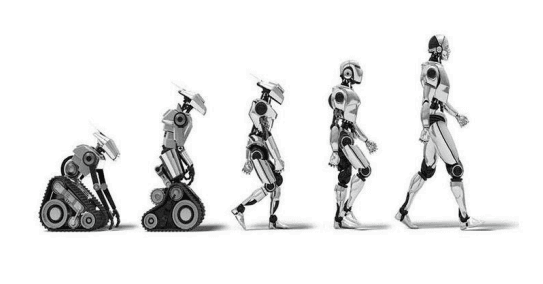
The term “Artificial Intelligence” was formally introduced in 1956 at the Dartmouth Conference, marking the birth of AI as a field of study. Its foundation, however, traces back to 1950, when Alan Turing proposed the Turing Test, a simple idea that if a machine’s responses are indistinguishable from a human’s, it can be considered intelligent. This became the starting point for AI.
By the 60s, AI excelled at structured tasks like complex calculations, but it struggled with real-world perception. It could solve complex chess positions in seconds yet fail to recognize a human face in a photograph.
The Shift to Pattern Recognition
In 2012, AlexNet changed the game, using a convolutional neural network to push image recognition to a new level. Instead of defining what a “Table” is, models were fed millions of labeled images, letting the system learn the concept through patterns.

This breakthrough dramatically improved image recognition performance in the ImageNet competition. It validated that machines could learn complex visual patterns directly from data
From Analysis to Creation
Until 2014, AI was limited to analyzing data, predicting outcomes, and recognizing patterns, but it couldn’t create anything new.
That changed when Ian Goodfellow introduced Generative Adversarial Networks, or GANs. These systems work through competition between two neural networks, a generator that creates fake data, and a discriminator that tries to detect it. With each iteration, both improved, producing outputs that increasingly resemble real images, faces, and artistic styles.
This marked the first serious step into generative AI.
This marked the first serious step into generative AI.
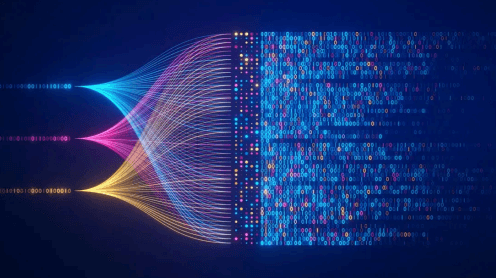
In 2017, the transformer architecture was introduced in the paper “Attention Is All You Need.” Unlike earlier models that processed text one word at a time, transformers use self-attention to understand relationships across an entire sentence or paragraph at once. This allowed AI to understand the context.
This became the foundation for large language models (LLM) like ChatGPT. When it launched in 2022, AI shifted from a niche tool to something anyone could use.
The Rise of Visual Generation
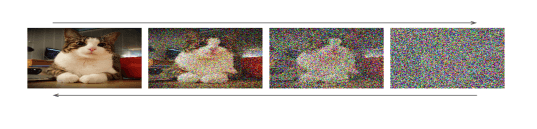
In 2020, visual AI took a new direction with diffusion models. The idea was to take an image and slowly break it down until it looks like random TV static, with no recognizable shapes left. Then train the model to reverse that process, step by step, rebuilding the image. Once it learns how to do this, it can start from pure static and generate entirely new images from scratch.
Open-source models like Stable Diffusion made this widely accessible, allowing anyone to create high-quality visuals on personal hardware.
The First Steps into Motion

Once AI mastered images, the next step was video. In 2023, Animate Diff introduced temporal consistency, allowing AI to understand motion over time, how people move, how light shifts, and how scenes evolve. Still, the results were far from perfect.
Outputs were often surreal and unstable, with the infamous “spaghetti eating” videos highlighting both progress and limitation. AI could generate motion, but it still didn’t understand reality.
The Modern AI Video Race

By 2024, the race for AI video generation intensified as models like Sora began showing signs of understanding 3D space, depth, and physical interactions within a scene. Soon after, competitors like Kling, Pika, and others entered the space, rapidly pushing quality forward
The next phase focused on tools. Platforms like Luma Dream Machine and Runway introduced keyframing and interpolation, allowing users to define a start and end frame while the AI generated everything in between.
By 2026, models like Kling 3.0 and Seedance 2.0 pushed AI video beyond short loops into longer, coherent sequences with consistent characters and believable physics.
The Future of Design Is System-Driven
AI is fundamentally reshaping the design industry, shifting it from slow, execution-heavy work to fast, system-driven creation. What once required large teams and long timelines can now be explored in hours, pushing design-as-a-service companies to evolve beyond production and focus on strategy, creative direction, and brand thinking.
At Intigly, we’ve already built around this shift. As a startup-friendly company, we’ve integrated AI directly into our workflow through Cazz, our AI-powered project management system. This creates a seamless loop between ideation, execution, and delivery, allowing us to move faster, maintain high-quality output, and scale creative work without friction.